



Indonesia’s Local Content Requirements: Pave the Way for a Sustainable Energy Future and Comprehensive Investment and Policy Plan 2025
In 2024, the JETP Secretariat actively participated in discussions hosted by various ministries, including the Ministry of Energy and Mineral Resources (MEMR), the Ministry of Industry (MoI), and other relevant authorities responsible for local content requirements concerning renewable energy technologies. These discussions provided invaluable insights for the JETP Secretariat to consider Local Content Requirements (LCR) as a critical component in aligning industrial policies with Indonesia’s energy transition objectives.
The insights gathered during the LCR development formed the foundation of the LCR write-up, serving as a teaser for the upcoming CIPP Update. The write-up will outline key strategies for sustainable and inclusive energy development in Indonesia. JETP secretariat’s engagement in a series of discussions in LCR can help foster collaboration and facilitate Indonesia’s energy transition goals.
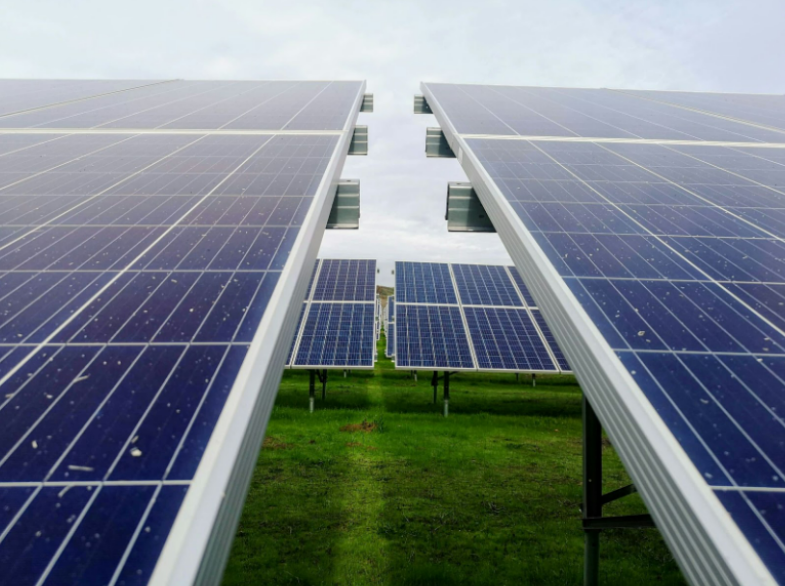
As the JETP Secretariat prepares to update the 2023 CIPP, one of the essential features of the update is a preview of policy reforms regarding Local Content Requirements (LCRs) in 2024. Indonesia's mandatory LCR in the power sector aims to boost domestic manufacturing while requiring careful consideration for the development of the renewable energy (RE) industry. In the past, stringent LCRs have encouraged a focus on domestic manufacturing and highlighted opportunities for cost efficiency, technological advancement, and supply chain development. Strengthening domestic capacity for key components, such as solar modules and wind turbines, presents a significant opportunity to reduce reliance on imports, optimize costs, and enhance supply chain resilience. To address these issues, the 2023 CIPP recommended a more flexible, phased approach to LCRs. This includes relaxing the mandatory LCRs for priority RE projects, providing targeted incentives, and supporting the growth of domestic manufacturing capacity.
In 2024, the government implemented transformative reforms designed to align the strengthening of the domestic supply chain with the overarching goals of Indonesia's energy transition. These regulatory changes introduced key adjustments to enhance flexibility and efficiency in project implementation. Among the notable shifts are the bifurcation of regulatory responsibilities, separating equipment-level and project-level oversight to streamline processes, and reducing certain minimum Local Content Requirement (LCR) thresholds, easing compliance for various stakeholders. Additionally, the regulations introduced LCR relaxations for specific projects under defined circumstances, providing targeted support for eligible initiatives.
In 2024, Indonesia introduced a series of pivotal reforms to harmonize industrial and energy policies. These reforms balance promoting the use of domestic products and attracting foreign investment for infrastructure development, particularly in power sector projects.
MOI Regulation No. 34/2024 is central to these changes. It establishes updated calculation methods for determining local content in solar PV goods and equipment components. This regulation replaces the previous framework outlined in MOI Regulation No. 4/2017, providing a more streamlined and modern approach to local content requirements at the equipment level.
Complementing this, MEMR Regulation No. 11/2024 regulates local content thresholds for goods and services in public power plants, covering both renewable and non-renewable energy projects. The regulation introduces flexibility, allowing relaxation from local content requirements under specific conditions. For instance, solar power projects that source modules from manufacturers committed to establishing onshore production capabilities may qualify for temporary relaxation. Furthermore, LCR exemption for projects financed by Multilateral Development Banks (MDBs) and Development Finance Institutions (DFIs) was established, reflecting a collaborative approach to facilitate Indonesia's energy transition while fostering a resilient domestic supply chain.
A notable change from previous regulation is the absence of a minimum LCR value per individual component. This allows developers greater flexibility to allocate the LCR weights according to the cost structure of each component, with cumulative LCR to meet the minimum threshold.
DGNREEC Regulation (Kepdirjen EBTKE) No.150/2024 set out the method to calculate the portion of the local content project measure, in which the domestic content using a cost-based approach under the project measures the portion for goods and services. This regulation underpins the further application of measuring the domestic content for each project, which can be applied to entire electricity projects for New Renewable Energy (NRE) and Transmission and Distribution (T&D). DG-Electricity is expected to issue similar regulations for NRE and T&D.
Adopting these regulations represents progressive steps taken by the government, which adopted the recommendation of the 2023 CIPP. These are substantial steps for Indonesia in building its domestic supply chain capability in line with its national climate agenda of achieving its NDC and energy transition toward NZE by 2060 or earlier. The 2024 CIPP will discuss these regulations in detail.


