



A Step Forward in Promoting Industrial Decarbonization in Indonesia’s Captive Power Sector
Jakarta, 24 January 2025 – The Directorate General of Electricity, Ministry of Energy and Mineral Resources (MEMR) successfully hosted a Focus Group Discussion (FGD) on Industrial Decarbonization from the Captive Power Sector at Hotel Mercure Sabang, Jakarta. The event brought together key industry players, government representatives, and stakeholders to discuss strategies for achieving energy transition goals while ensuring industrial resilience.
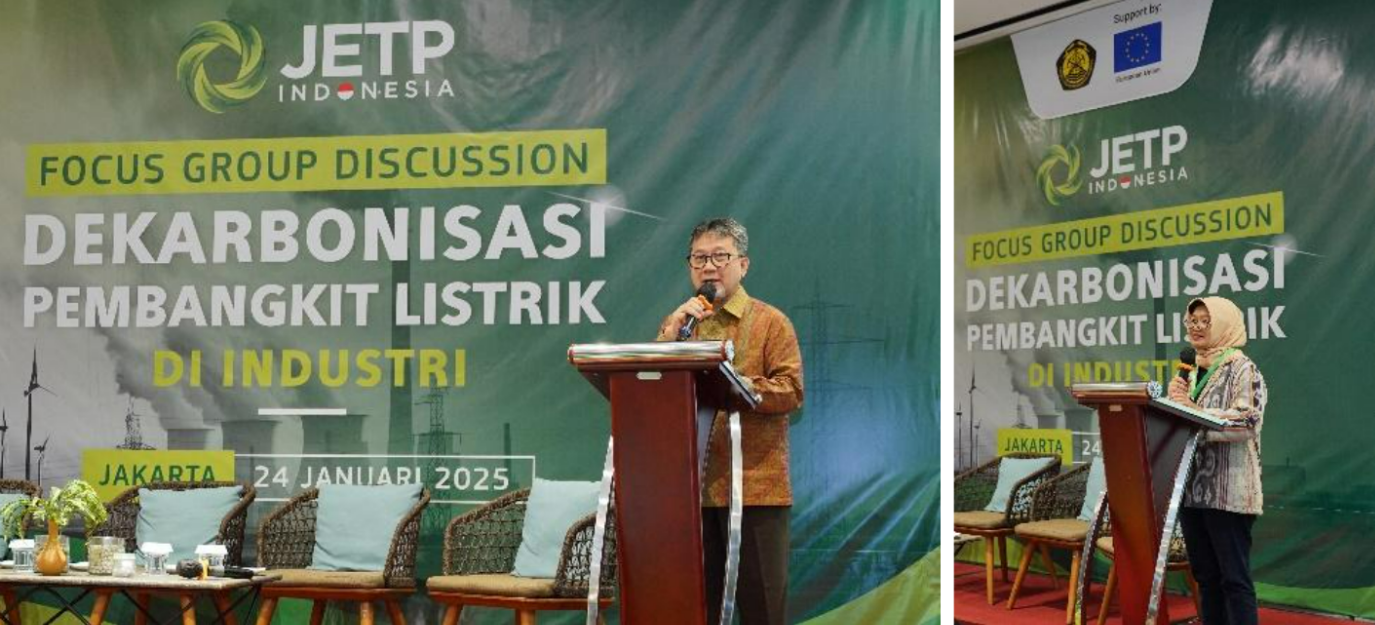
The primary objective of the FGD was to socialize Indonesia’s captive power regulation and invite industries relying on captive power to share updates on their decarbonization efforts. This initiative is part of a broader agenda to gather inputs, validate industry captive power data, introduce Just Energy Transition Partnership (JETP) financing schemes, and foster collaboration through best practices and technical experience-sharing.
At the FGD on Industrial Decarbonization from the Captive Power Sector, Wanhar, Director of Electrical Power Programs, underscored the critical role of energy resilience in shaping Indonesia’s sustainable future. He highlighted the country’s abundant nickel reserves, a key resource in battery production, and the global push for clean energy technologies. Wanhar’s remarks reinforced the government’s long-term vision—a future where Indonesia leverages its natural resources to drive economic growth and environmental sustainability. He noted that the government is currently reviewing downstream strategies for the next decade through the 2025-2034 Electricity Supply Business Plan (RUPTL), which outlines a substantial increase in renewable energy (RE) generation.
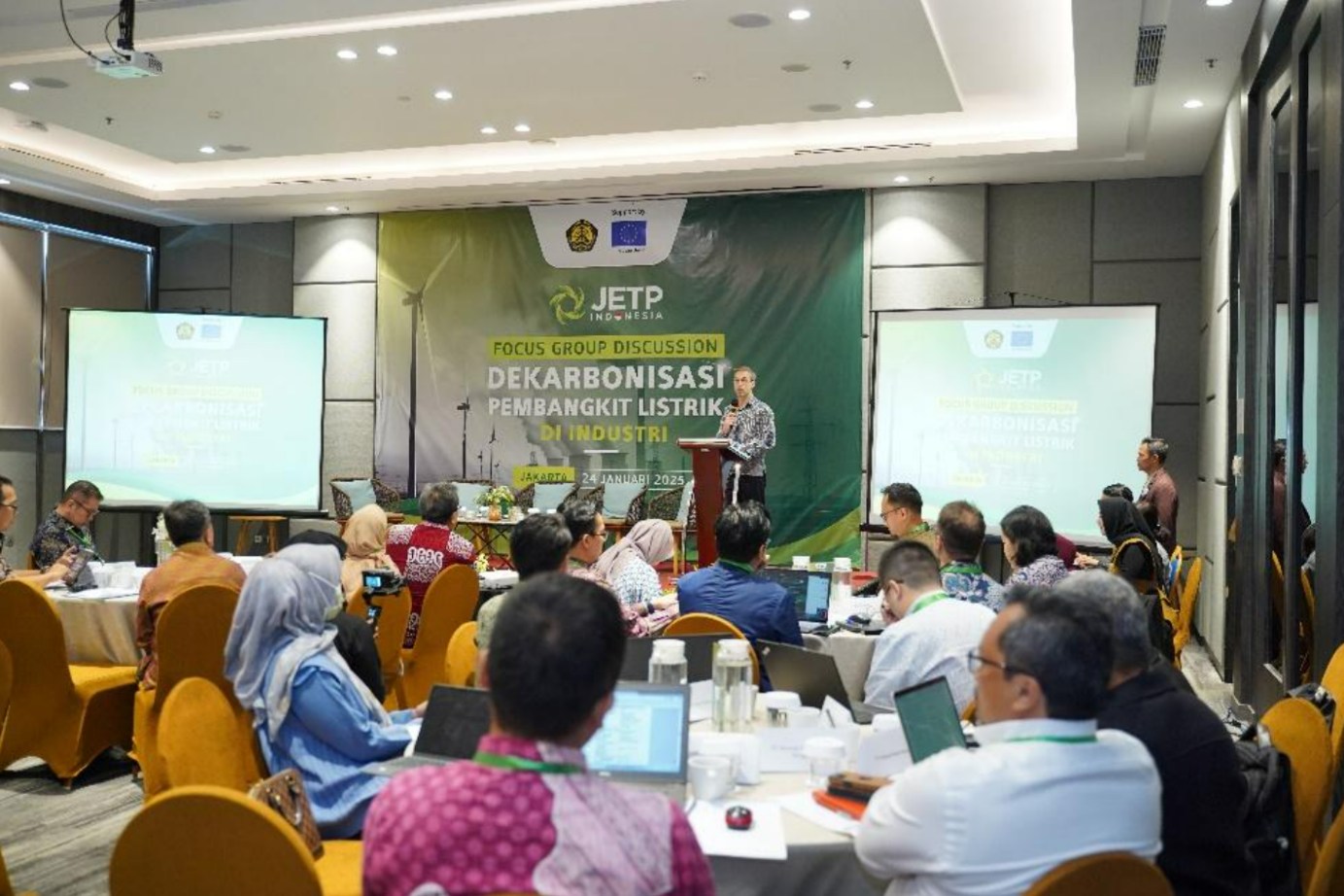
With Indonesia positioning itself as a major player in the energy transition, the government is actively reviewing downstream industrial strategies for the next decade. This comprehensive evaluation is part of the 2025-2034 Electricity Supply Business Plan (RUPTL), which envisions a significant shift towards renewable energy (RE) generation. The plan aims to reduce reliance on fossil fuels and enhance industrial competitiveness by integrating cleaner energy sources into the national grid.
Sri Hastuti Nawaningsih, Secretary of the Agency for Standardization and Industrial Services Policy at the Ministry of Industry, emphasized that industrial growth and decarbonization efforts must complement each other to ensure sustainable economic development. She highlighted that Indonesia’s industrial sector contributed 17% to the national GDP in Q3 of 2024, reinforcing its role as a key driver of economic progress. The Ministry of Industry reaffirmed its commitment to achieving net-zero emissions by 2050, recognizing the urgent need for environmentally responsible growth. This ambition is backed by regulatory support and the implementation of a carbon economy framework in alignment with Presidential Regulation 98/2021.
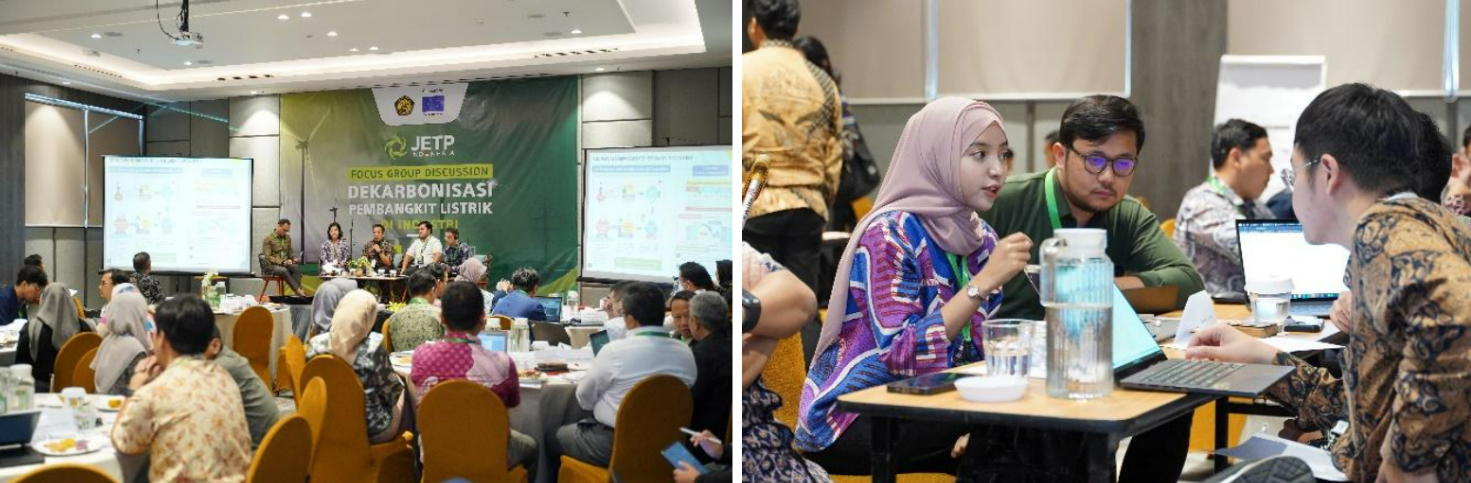
A total of 40 industries participated in the FGD and one-on-one sessions, with 30 industries already preparing the necessary data for the JETP Captive Power Study, demonstrating strong industry engagement. Meanwhile, 10 industries will require follow-up sessions to complete their data submissions. Despite this, the FGD serves as a critical starting point for industrial decarbonization, reinforcing the government's commitment to a sustainable energy transition while maintaining industrial competitiveness. As Indonesia advances its net-zero agenda, collaboration among policymakers, industry leaders, and financial institutions will be crucial in shaping the country’s energy future.


